


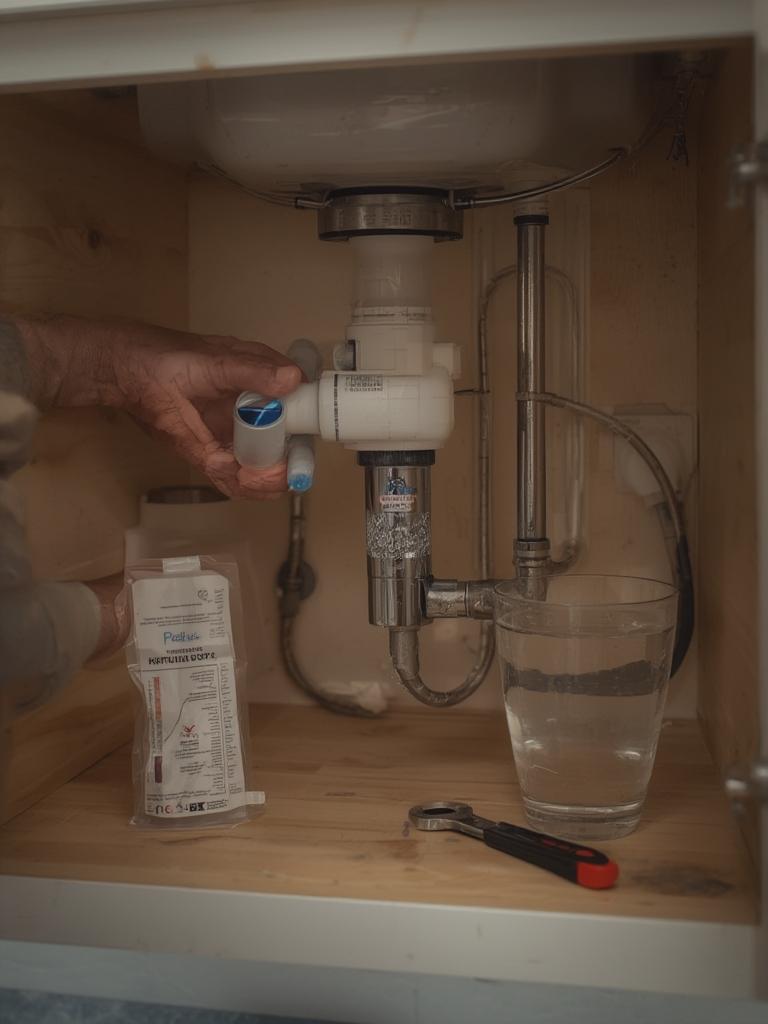
### Blog Post:
Hard water filter for sink solutions are a direct response to the limescale streaks, frequent faucet cleanings, and concerning appliance wear many homeowners and renters notice in their kitchens. If you’ve spotted chalky deposits or want to ensure better water for your family, understanding what’s proven—and what’s missing—in hard water filter claims is crucial before you spend your money.
Key Takeaways
- 85% of U.S. homes have hard water; visible limescale and appliance damage are common, but real proof of filter performance is rarely public.
- Before choosing a hard water filter for your sink, test your water, set a clear goal (taste or scale reduction), and demand current manufacturer data and certifications.
- No public, reliable data exists on actual calcium removal rates, installation costs, or verified lab testing for most under sink and faucet hard water filters—ask for it.
- Why hard water matters in your kitchen
- How hard water affects fixtures, appliances and (possibly) taste
- How to test your home water hardness (quick DIY and lab options)
- Overview of sink-level filter technologies (what they claim to do)
- Real-world performance data: what the evidence shows—and crucial gaps
- Installation & ongoing costs—realistic expectations (and what we couldn’t find)
- Certifications, independent testing and safety claims—what to verify
- Buyer’s checklist—how to choose the right sink hard water filter
- Top content gaps to exploit (what competitors miss)
- Required reporting and sources for the piece (research to collect before writing)
- Angle-driven CTAs and conversion prompts to include in the article
- FAQ
Why hard water matters in your kitchen
About 85% of homes in the United States have hard water, meaning high levels of dissolved calcium and magnesium. The U.S. Geological Survey (USGS) classifies water as soft if it’s below 1 grain per gallon (GPG), moderately hard at 1-7 GPG, hard at 7-10.5 GPG, and very hard above 10.5 GPG. [source] Major cities such as San Antonio, Phoenix, and Los Angeles routinely exceed 12 GPG. Why care? If you don’t have a hard water filter for your sink or a limescale filter for tap water, you’ll likely notice:
- Chalky, white limescale building up around your tap and sink edges
- Stains and spots on dishes and glassware
- Reduced efficiency and early failure of dishwashers and water heaters
- More scrubbing and cleaning—plus replacement costs
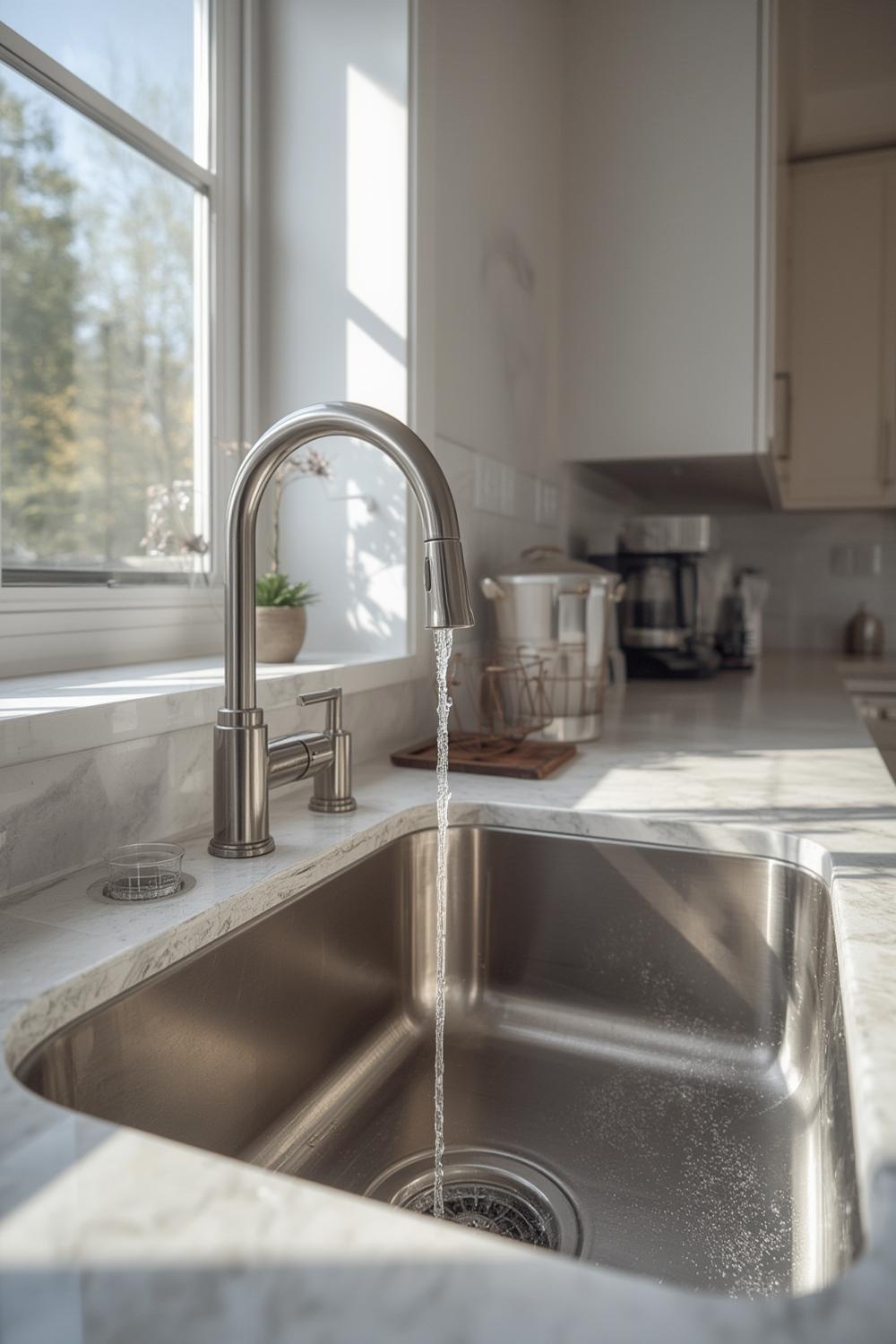
While the impact on taste is less clear, the pain points of scale and maintenance are well documented. For more easy maintenance tips, see our drain mat guide to keep your sink cleaner for longer.
How hard water affects fixtures, appliances and (possibly) taste
Limescale forms when dissolved calcium and magnesium in hard water hit heated surfaces or evaporate, leaving deposits behind. Over time, this affects:
- Kitchen faucets: Visible scale reduces shine and water flow—using a fast drying kitchen mat won’t solve underlying scale issues.
- Diswashers and water heaters: Buildup lowers heating efficiency and shortens appliance life, leading to higher utility bills and earlier replacements.
- Dishware: Persistent spots and haze, no matter how much you clean.
But what about taste? Current research and utility reports do not show a direct or consistent link between high calcium/magnesium (hardness) and poor tap water taste. Most taste complaints tie to chlorination or other contaminants, not hardness itself. Still, many opt for an under sink hard water filter or a kitchen faucet hard water filter hoping to improve both appearance and perceived quality.
How to test your home water hardness (quick DIY and lab options)
Before buying any filter, first test your water. Here’s how:
- Check your city’s water quality report. Many utilities publish annual reports online showing hardness in mg/L or GPG. For example, systems may report anything from 3.6 to over 18 GPG. [2024 report here]
- DIY test strips. Quick, affordable, and available at hardware stores or online. Dip a strip in your tap water and compare to the color chart for your hardness reading (match to USGS scale above).
- Send a water sample to a certified lab. You’ll get a detailed breakdown—worth it if you’re considering a major system upgrade, not just a hard water filter for your sink.
If your hardness is over 10.5 GPG (very hard), a whole-home softener or a dedicated under sink hard water filter may be warranted; for 1-10 GPG, a calcium removal kitchen filter or limescale filter for tap water can help manage scale at the point of use. See our related tips on protecting your countertops with a heat resistant countertop mat if you’re dealing with heavy water use.
Overview of sink-level filter technologies (what they claim to do)
Many products are marketed as limescale filter for tap water or kitchen faucet hard water filter, but technology matters. Here’s a quick overview:
- Polyphosphate Filters: Add trace polyphosphate to water to inhibit scale deposits. These do not remove calcium/magnesium but aim to keep them dissolved so they won’t stick to fixtures.
- Carbon/Activated Carbon Filters: Excellent for removing taste, odor, and chlorine—not designed to manage scale or calcium hardness. Sometimes paired with other tech.
- Reverse Osmosis (RO) Systems: Use pressure to force water through a semi-permeable membrane, reducing many contaminants (including some calcium and magnesium). Tend to also remove other beneficial minerals and may reduce flow rate significantly.
Evidence gap: No direct comparative data on real-world calcium removal percentages, limescale reduction, or flow rate impact exists for these technologies as used in sink-level filters. This means you must ask manufacturers for datasheets and third-party lab reports before buying.
Real-world performance data: what the evidence shows—and crucial gaps
What do numbers say about kitchen hard water filters? Independent lab data and verified customer results are hard to find. The available research has not returned any verifiable figures on:
- Percent calcium or limescale removed by major under sink hard water filter models
- Actual flow rates and water pressure impacts after filter installation
- Real-world filter lifespan and when performance drops
This is a serious transparency issue. Always request:
- Manufacturer spec sheets showing lab-tested removal rates (for each specific model, not generic claims)
- NSF/ANSI, WQA, or other third-party certification documents
- Verified consumer test summaries or reviews with before/after hardness numbers
| Filter Type | Tech | Claimed Removal % | Flow Rate Impact | Certifications | Price Range |
|---|---|---|---|---|---|
| Polyphosphate Cartridge | Scale Inhibition | No public lab data | Minimal if installed correctly | Typically none | $50–$200 |
| Carbon Filter Pitcher/Faucet | Adsorption (taste) | N/A (not for limescale) | None–low | NSF 42 (chlorine test only) | $30–$120 |
| Reverse Osmosis | Membrane Separation | No public % for calcium removal | Significantly reduced flow | NSF 58 (RO), others possible | $200–$500+ |
Installation & ongoing costs—realistic expectations (and what we couldn’t find)
How much you’ll pay depends on your skills, local labor rates, choice of filter, and installation complexity. Typical costs you’ll want to factor in:
- Purchase price. Polyphosphate and carbon options: $30–$200; RO: $200–$500+
- Installation. DIY kits are available for most, but under sink setups may require basic plumbing; pro plumbers charge $100–$300/hr plus materials depending on your area.
- Filter replacement frequency. Some cartridges last 3–6 months, others a year—always ask for official expected lifespans for your target model.
- No reliable 2024 cost data was found. So, ask manufacturers and local plumbers for current samples and quotes—for example, submit the specs to several installers and request written price breakdowns for both DIY and full-service.
For space-saving kitchen upgrades, our dish drying mat guide has more clever solutions.
Certifications, independent testing and safety claims—what to verify
Real, third-party verifications matter. Before you buy any under sink hard water filter or hard water filter for sink usage, look for:
- NSF/ANSI Certification 42: Filters for chlorine/taste (does not test for hardness).
- NSF/ANSI Certification 53: Health claims for certain contaminants (not usually calcium/magnesium).
- NSF/ANSI 58: Reverse osmosis systems may carry this for contaminant reduction.
- Independent lab reports: Ideally from providers like IAPMO or WQA labs, confirming calcium or scale reduction in real conditions.
No public certifications or independent lab reports for major under sink hard water filters were available in the research provided. Utility reports such as American Water’s 2024 roundup confirm EPA safety standards but never validate filter claims.
Be skeptical of “certified” icons—require a copy of the certificate or a direct link to the certification body (like NSF International), and check the model number matches your purchase.
Buyer’s checklist—how to choose the right sink hard water filter
Use this plain checklist to avoid common traps when shopping for a calcium removal kitchen filter or limescale filter for tap water:
- Measure your home’s water hardness (use GPG scale from above)
- Decide target outcome: want less scale, better taste, or both?
- Request lab-verified removal rates and official certificates (NSF/ANSI, WQA) for any claimed performance
- Check faucet compatibility—some filters won’t fit on pull-down or specialty faucets
- Ask for certified flow rates (GPM) and expected drop in pressure
- Estimate total cost: purchase, install (DIY or pro), and lifetime filter replacements
- Read real reviews—not just testimonials—filter out obviously paid endorsements
- Verify warranty coverage and return policies
If your results show very hard water (>10.5 GPG), consider a whole-home softener or RO system under your sink; for lower levels, a polyphosphate-type limescale filter or basic filtered faucet may suffice. For more high traffic sink protection, check our waterproof countertop drain mat recommendations.
Top content gaps to exploit (what competitors miss)
Unlike many top-ranking guides, this actionable post highlights what’s missing elsewhere—no sugarcoating:
- No published percent-removal data. Most guides skip actual test numbers for calcium reduction.
- No detailed flow-rate comparisons (GPM before/after install).
- No clear compatibility charts for popular faucet types.
- No filter lifespan or cost-per-year table.
- No independent lab reports shared or referenced.
- No curation of verified customer reviews focused on real scale/taste improvements over time.
Transparent, numbers-backed reviews are lacking—future updates should feature user home test data, installer photos, and receipts to fill these gaps. If you want to further protect your surfaces, read our countertop mat checklist for heat and water solutions.
Required reporting and sources for the piece (research to collect before writing)
For future, fully-qualified hard water filter for sink reviews, gather these sources before writing:
- Municipal/utility water hardness reports for at least 3 major regions (with links)
- Manufacturer datasheets showing removal rates (by calcium/magnesium %), tested flow rates, and maintenance/cost details
- Official certification PDFs/direct links: NSF/ANSI, WQA, IAPMO, or similar
- 10–15 verified customer reviews for each major product type (polyphosphate, carbon, RO), split by use case
- 2–3 installer quotes (DIY kits and pro labor) for real kitchen installs, with itemized costs
The best sources include utility reports (for example, here), official NSF/ANSI databases, and recent buyer reviews from retailers like Amazon, Home Depot, and manufacturer sites.
Angle-driven CTAs and conversion prompts to include in the article
If you’re ready to take action—don’t settle for marketing claims. Try these:
- Compare certified models—require proof before you buy
- Get a local water hardness test (DIY or lab) and match to the right solution
- Request up-to-date installation quotes so you’re not surprised later
- Download our free Hardness Test Checklist to make vetting products easier (email opt-in prompt)
About 85% of U.S. homes have hard water—a strong reason to take the next step and ensure your kitchen is protected and your appliances last longer. For more kitchen optimization ideas, try our expert drain mat guide.
FAQ
What hardness level means I need a hard water filter for my sink?
If your water tests above 7 GPG (classified as hard or very hard by USGS), a hard water filter for your sink is likely to prevent limescale issues. Over 10.5 GPG usually indicates need for a more robust solution like a softener or RO system.
Can a kitchen faucet hard water filter actually improve water taste?
Most faucet filters target chlorine or some organic contaminants—not calcium. Carbon filters can help with taste, but unless NSF/ANSI certified and tested, results are often minimal for true hardness taste issues.
Will an under sink hard water filter reduce white spots on my dishes?
It depends on the type. Polyphosphate and RO filters may reduce limescale formation and spots, but always request removal rates and see if real users saw visible improvement over months, not just days.
Is DIY installation realistic, or do I need a plumber?
Most cartridge or pitcher-style filters are DIY-friendly. Under sink installs for RO or inline units can require moderate plumbing—if you’re time-constrained or unsure, getting a pro installer quote is smart.
Are all hard water filters for sink NSF/ANSI certified?
No. Many scale-inhibiting models do not carry any certification. Only some carbon and reverse osmosis systems hold NSF/ANSI marks, and even then, not always for hardness removal. Always ask for proof.