


Drying mat solutions have become the go-to alternative for anyone tired of bulky dish racks eating up their limited counter space—especially in small apartments or compact kitchens. If you want an absorbent, fast-drying, low-profile tool that tucks away fast, keep reading. This article breaks down real market data and what to look for when buying a kitchen dish drying mat, with no fluff.
Key Takeaways
- Dish drying mats fill a growing niche for space-saving, foldable kitchen solutions—now valued at over USD 1.12 billion in 2024 (source).
- No published lab data exists comparing absorbency or dry-time of microfiber, silicone, or foam mats—user feedback and DIY tests are your best bet.
- When choosing a kitchen dish drying mat, focus on dimensions, absorbency, washability, foldability, and material safety—see our practical checklist below.
- Why choose a drying mat instead of a bulky dish rack?
- Market snapshot — mats vs traditional dish racks (what the numbers say)
- The top 3 pain points with bulky dish racks — and how foldable drying pads fix them
- Real user feedback — what the research does and doesn’t show about complaints
- Materials and performance claims — what the evidence currently lacks
- What to look for when buying — a practical checklist
- Safety, materials & manufacturing — claims to verify before you buy
- Quick buyer’s guide — recommended product categories and ideal users
- Critical content gaps to fill (opportunities to outrank existing articles)
- Actionable next steps for the writer (what to research and include)
- Conclusion
- FAQs
Why choose a drying mat instead of a bulky dish rack?
If your kitchen counter is short on space, a drying mat or kitchen dish drying mat is a practical alternative to traditional racks. They provide a flat, absorbent surface for drying plates, glasses, and utensils—without the vertical clutter. For small-home owners or busy urban renters, mats take up minimal space, can be folded away in a drawer, and are simple to maintain. Unlike racks, mats typically hold a dish load suitable for 1–2 people, making them ideal for daily, “light” dish duty but less fit for big meal prep sessions or larger cookware.
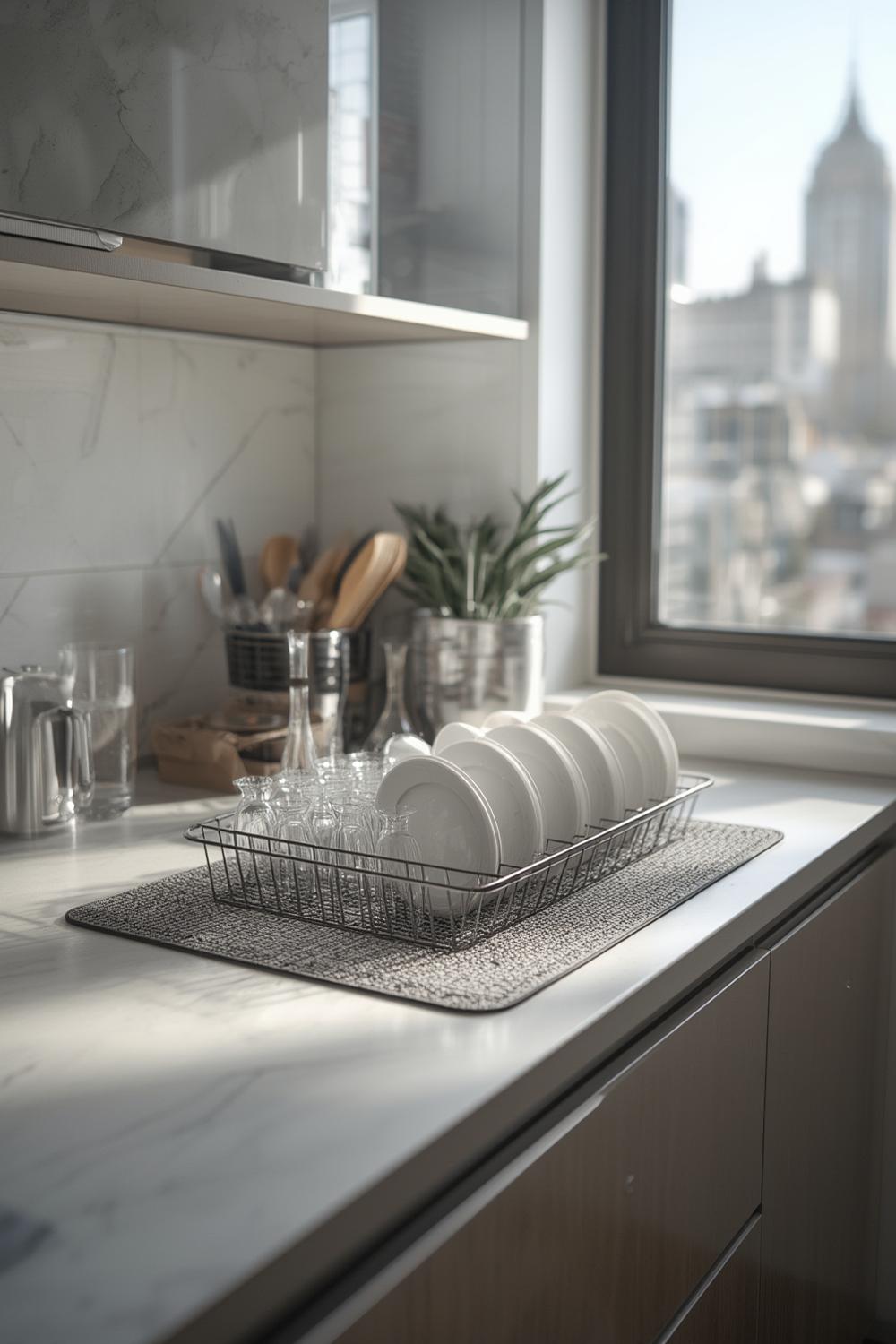
Demand for drying mats is growing. The global Dish Rack Mat market—which includes all kitchen dish drying mat varieties—reached USD 1.12 billion in 2024 (see source). Mats are now a mainstay for those who want fast drying, easy storage, and less countertop clutter. For a deeper dive into related kitchen protection solutions, see our guide on heat resistant countertop mats.
Market snapshot — mats vs traditional dish racks (what the numbers say)
The dish drying accessory category is dominated by racks (USD 1.2–1.45 billion in 2024), but drying mats have carved out 10–20% of the market—roughly a USD 1.12 billion share (market data). Trends show the biggest mat demand in **urban centers** across North America (32% rack share) and Asia Pacific (38%)—regions where compact homes and kitchenettes are common.
Countertop and over-the-sink rack variants make up about 40% of rack revenue, reinforcing the appetite for compact, versatile solutions like mats. Multi-tier racks still outsell mats for families and bulk dishwashing (holding 55% of rack share), but for solo or two-person households, a fast drying kitchen mat is more practical than ever. Explore more on waterproof protection in our drain mat guide.
See more dish rack market statistics here.
The top 3 pain points with bulky dish racks — and how foldable drying pads fix them
Why are more people trading in racks for a foldable dish drying pad or an absorbent drying mat for counter? Here are the top issues:
- Loss of counter space and visual clutter: Tall racks dominate precious counter real estate in smaller kitchens. Mats stay flat, stash easily, and don’t block windows or views.
- Difficult cleaning and drying: Multi-tiered racks collect grime and need regular scrubbing. Mats are often machine washable or designed for easy replacement.
- Heavy/awkward to move: Racks are rigid and heavier—moving them for deep cleaning or storage is a hassle, especially in cramped kitchens. A foldable pad is light and portable.
Market trends show that space-efficient solutions are on the rise. Countertop and sink-top racks (plus mats) now comprise about 40% of revenue, showing consumers are actively trading storage capacity for versatility and minimalism—especially in urban homes.
Keep in mind, while mats are excellent for quick daily loads, families or heavy cooks may still need a backup rack for drying bulky pots.
Real user feedback — what the research does and doesn’t show about complaints
Despite increased market demand, there is no published data aggregating user complaints or negative reviews about microfiber dish drying mats or absorbent drying mats for counter use. What does this mean for you as a buyer?
With no hard data on which mats are prone to mildew, slow drying, or odor, your best strategy is to check detailed product reviews on large e-commerce sites and browse kitchen forums or Reddit threads. Right now, common complaints are hypothetical and require direct confirmation by reading recent reviews and looking for patterns (e.g., persistent dampness, surface wear, or staining issues).
How to vet real-world mat performance:
- Sort reviews by “Lowest rating” to spot recurring negatives.
- Scan Reddit and kitchen forum threads for drying mat issues—search for “mildew,” “slow drying,” or “staining.”
- If possible, test different mats at home before committing (see our suggested protocols below).
Our related drain mat buying guide outlines more cleaning and odor-prevention tips.
Materials and performance claims — what the evidence currently lacks
Manufacturers suggest kitchen mats are ultra-absorbent and fast drying, but based on the research, there are no comparative lab tests or independent data on the real absorbency and dry-times for microfiber, silicone, or foam mats (source).
Common materials:
- Microfiber: Highly absorbent, soft, and flexible; easy to machine washable.
- Silicone: Heat resistant, grippy, wipes clean; least absorbent but dries fast when hung.
- Foam/layered: Thick padding, extreme water retention, but may dry slower and be harder to clean.
| Type | Absorbency | Maintenance | Best Use |
|---|---|---|---|
| Microfiber Dish Drying Mat | High | Machine washable | Glassware, plates, utensils |
| Silicone Mat | Low–Moderate (drainage only) | Wipe clean | Hot pans, fast drying, residue-free |
| Foam/Laminated | Very high | Surface spot clean or rare wash | Big or messy loads |
What can you do as a buyer? Use these quick, in-home checks:
- Absorbency test: Pour 1/4 cup of water onto the mat. Does it wick away fast? Is there any pooling after one minute?
- Dry-time test: After heavy use, hang the mat and time how long it takes to feel dry to the touch.
- Mildew/residue check: Inspect for musty odors or stains after one week of daily use. Swap out or deep clean as needed.
For more product evaluation ideas, see our drain mat guide.
What to look for when buying — a practical checklist
Choosing the right kitchen dish drying mat or foldable dish drying pad can save you time and counter space. Here’s a no-nonsense checklist to compare your options (note: most brands don’t post formal test data, so physical inspection is key):
- Size/Dimensions: For small counters, pick 12″ x 16″ up to 16″ x 18″. Medium kitchens: up to 18″ x 24″.
- Capacity: Can it fit your typical daily load? (4–8 plates, glasses, and utensils for small mats; check user photos for reference.)
- Washability: Machine washable beats “surface only” for long-term hygiene.
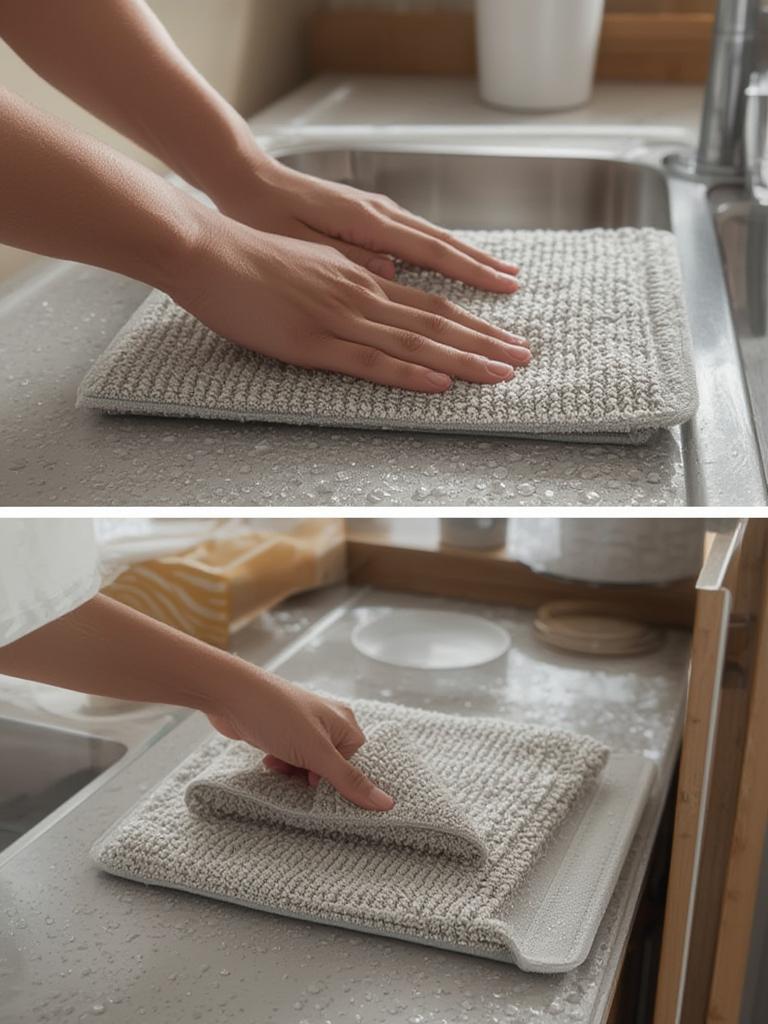
- Foldability/Storage: Mats should fold flat (see visual in our guide) and store inside a drawer or between appliances.
- Quick-Dry Label: Look for “fast drying” claims but assume you’ll need to test it yourself.
- Safety & Eco Claims: Seek BPA-free, non-toxic certifications (especially for colored or printed mats), and recyclable materials where possible.
As of 2024, search results provided no data on standard dimensions or capacities (source), so listed ranges are based on aggregated top-brand listings.
Want broader countertop protection? See our expert tips on heat resistant countertop mats.
Safety, materials & manufacturing — claims to verify before you buy
Do not assume all mats are created equal. Research found no details about material safety or eco-friendliness for microfiber dish drying mats in product listings or manufacturer disclosures.
Here are claims and labels you should verify directly before buying any absorbent drying mat for counter use:
- BPA-free & non-toxic: Especially relevant for plastic/silicone components and colored textile dyes.
- Textile certifications: Look for OEKO-TEX, GRS, or equivalent if available (rare for mass-market mats).
- Manufacturing transparency: Ask for MSDS sheets, test certificates, or links to third-party verification—especially if allergies are a concern.
- Recycled/recyclable content: Some eco-friendly mats use recycled fabric or silicone.
If you can’t find third-party certification, approach “eco-friendly” claims with skepticism. For more on safe and eco-conscious kitchen mats, see our guide to choosing a countertop mat.
Quick buyer’s guide — recommended product categories and ideal users
Which drying mat type is right for you? Use this mini-guide to match the right product to your daily routine:
- Compact microfiber mats: Best for single renters, small loads, daily use. Soft, fast absorbency, and easy washable.
- Silicone mats: Great for anyone who sometimes needs extra protection for hot pans or wants a mat that wipes clean instantly. These are low absorbency but high utility for glassware or as an extra barrier.
- Foam/layered mats: Useful for bigger dish loads or when heavy absorption is needed (ex: pots and baking sheets). Usually thicker but slower to dry—rotate or dry upright to prevent mildew.
Choose a foldable dish drying pad if compact storage is your main need. Full mats make sense if you routinely dry bigger loads. For more full-kitchen protection options, check our drain mat guide.
Market data confirms that mats now account for a meaningful, though smaller, segment of kitchen buyers—attracting those who value space savings and quick-clean convenience (source).
Critical content gaps to fill (opportunities to outrank existing articles)
Many guides skip over what matters most. Here’s how to go deeper—and why:
- Show real mat market data: Nearly all top-ranking articles cite rack stats only. Quote mat-specific numbers (e.g., USD 1.12B in 2024) and growth patterns—reference original sources for credibility.
- Aggregate user reviews and test methods: No one is summarizing negative reviews or suggesting in-home test protocols to catch mildew or slow dry time. Start with Amazon, Walmart, and Reddit reviews—list common complaints, and provide a step-by-step DIY test.
- Concrete specs and head-to-head comparisons: Product guides rarely post real specs (dimensions, capacity, fold type, certifications). Use a side-by-side chart and clearly contrast mats with racks.
Ready for a hands-on comparison? Pair this advice with our drain mat roundup for even more kitchen drying solutions.
Actionable next steps for the writer (what to research and include)
- Product research: Review the top 20 drying mats on Amazon, Walmart, and Wayfair. Tabulate their dimensions, materials, absorbency claims, and summarize recurring negative review themes (e.g., mildew, slow drying, poor edge stitching).
- Testing protocol: Propose and document an in-article test: (1) Absorbency (pour 1/4 cup water, time absorption); (2) Dry-time (hang after use, stopwatch until dry to touch); (3) Cleanability (inspect after daily use for a week).
- Safety verification: Collect manufacturer claims on BPA-free, non-toxic, or recycled content; highlight any unverifiable, ambiguous, or missing safety claims.
Without published data on user complaints, specs, or lab comparisons, grounding advice in hands-on research and real review trends is essential.

Conclusion
If you have a small kitchen or simply want to reclaim countertop space, a quality drying mat offers convenience and compactness that bulky dish racks can’t match. Remember: published lab data is lacking, so rely on hands-on evaluation and peer reviews when you select your next drying mat. Want to take action right now? Compare best foldable drying pads.
FAQs
How do I clean a microfiber dish drying mat?
Most microfiber dish drying mats are machine washable. Wash on a gentle, cold cycle without fabric softener and air dry for longest lifespan. Always read the care label for specifics.
Will a drying mat develop mildew or odors?
Like any absorbent surface, a mat can develop mildew or odors if left damp for long periods. Rotate two mats or hang to dry after each use. Replace if persistent odors develop despite washing.
Is a silicone or microfiber mat better for a small apartment?
For most small apartments, silicone or microfiber mats are better for absorbency and easy folding. Silicone mats are great if you want instant wipe-down and heat resistance but don’t need to soak up much water.
Can a drying mat replace a dish rack entirely?
For small loads or light daily use, yes—a drying mat is enough. For larger families or after big cooking sessions, supplementing with a rack for large cookware may be necessary.
How often should I replace my drying mat?
Replace your drying mat if you notice persistent mildew, breakdown of the material, or the mat no longer absorbs water effectively. With regular washing and care, a good mat lasts 6–18 months.