


Countertop mat shoppers face a surprising information vacuum: While these simple tools promise to protect your kitchen surfaces from heat, spills, and stains, hard facts and side-by-side product data are nearly nonexistent. If you are a home cook or homeowner investing in your kitchen, knowing how to choose and maintain a reliable heat resistant countertop mat is essential—especially when the evidence is scarce, and most claims come straight from brands.
Key Takeaways
- There is no independent market or durability data for countertop mats—buyers must carefully review specs and claims directly with sellers.
- Choosing the right kitchen countertop protector mat depends on clear thermal ratings, fit, waterproofing, materials, and installation ease.
- A step-by-step, evidence-driven checklist helps you buy and maintain the most effective heat resistant, waterproof countertop mat for your kitchen.
- Market reality — no dedicated market data for countertop mats
- Who should buy a countertop mat — real use cases and decision triggers
- Materials explained — claims and data gaps
- Heat resistance and certifications — what to look for and how to verify claims
- Waterproofing and cleaning — real-world maintenance considerations
- Common complaints & negative review themes
- Pricing landscape — how to set expectations
- Installation, maintenance, and warranty — comparing brands
- Effectiveness of silicone stove-gap covers — available evidence and testing approach
- Top 3 content gaps competitors often leave out
- Buyer’s checklist & quick FAQ
- Research gaps & next steps for editorial follow-up
Market reality — no dedicated market data for countertop mats (why this guide is necessary)
If you search for real numbers on the countertop mat or kitchen countertop protector mat market, you’ll hit a wall. No market-size, growth, or performance data exists for these specific products. Instead, global kitchen countertop statistics are bundled with construction surfaces like granite and engineered stone, not removable mats. Example: the countertop market is forecast at $136.19B in 2025 to $141.39B in 2026 at a 4.80% CAGR, but this has nothing to do with mats themselves.
Manufacturers and brands fill the void with their claims. As a result, if you want reliable information—especially regarding heat, waterproofing, or kitchen fit—you have to be diligent and verify each detail for yourself.
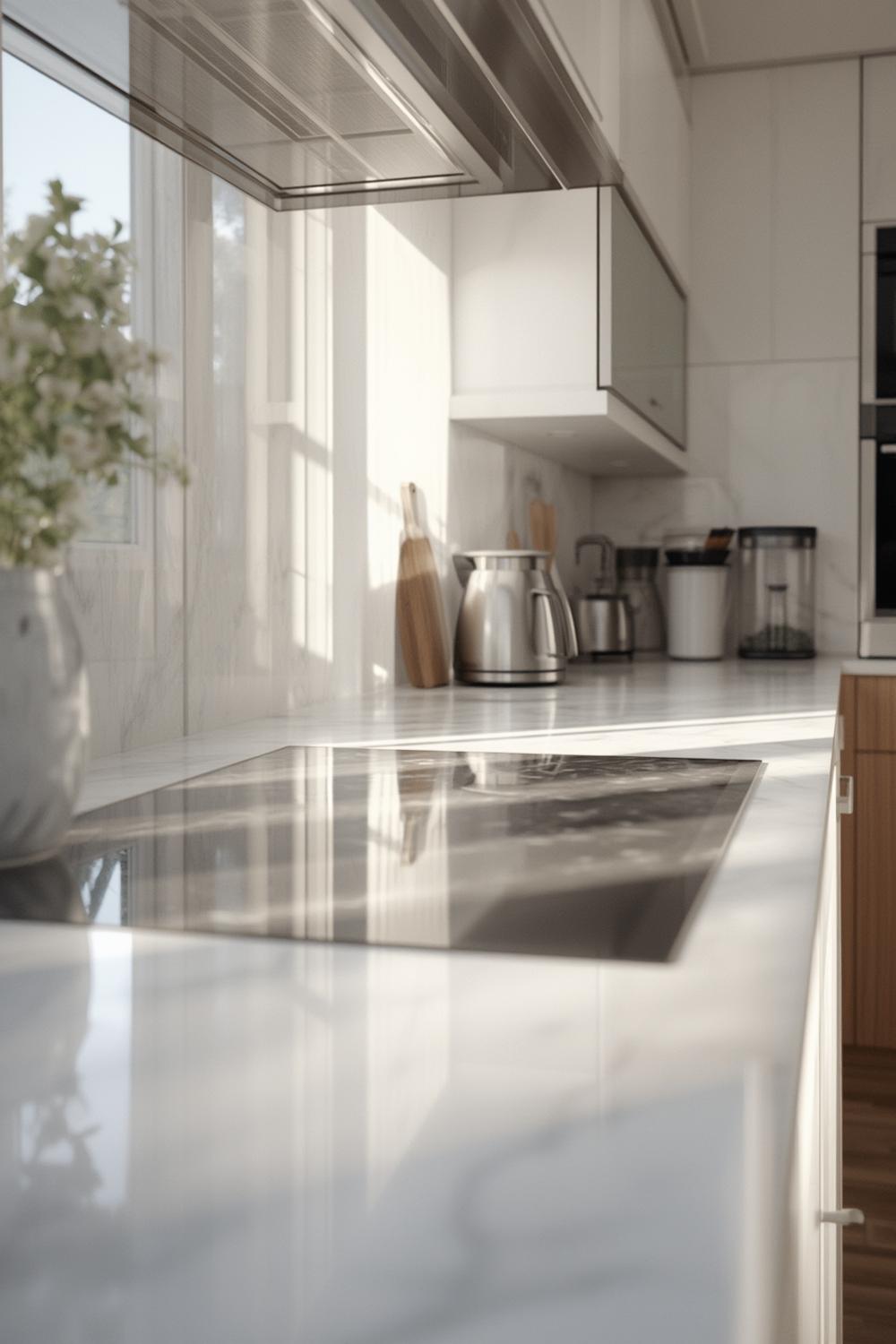
Who should buy a countertop mat — real use cases and decision triggers
Countertop mats offer protection if you:
- Regularly rest hot pans or appliances near your stove
- Want a waterproof kitchen counter mat under coffeemakers, stand mixers, or air fryers
- Need quick, non-permanent protection for prepping meals or baking with kids
- Worry about stains, spills, or pet/child accidents on expensive countertops
Key buying triggers include a need for true heat resistance (not just warmth), reliable waterproofing, easy cleaning, and an exact fit. Yet, no user review or negative feedback data was found in online research. This means you can’t rely on crowdsourced ratings, so each buyer must scrutinize specs for heat, stain, odor resistance, and dimensions before purchasing.
Materials explained — what manufacturers usually claim and what the research could not verify
Manufacturers frequently promote these materials in heat resistant countertop mat listings:
- Food-grade silicone (most common for heat)
- PVC (polyvinyl chloride)
- Fiberglass layers or blends
- Silicone blends and heat-resistant polymers
Material choices matter for maximum temperature tolerance, waterproofing, stain/odor retention, and food safety. Strikingly, no published data on tested temperature limits, certification, or durability for a heat resistant countertop mat or silicone counter cover for stove gap is available. Always demand evidence: Look for brands with published test results or at least an explicit, labeled temperature rating with third-party certification for food safety and heat performance.
Heat resistance and certifications — what to look for and how to verify claims
For a heat resistant countertop mat, certifications and clear heat testing are crucial. Typical certifications to ask about:
- FDA or EU Food-Grade approval (safe for direct food contact)
- RoHS (limits hazardous substances in plastics or polymers)
- UL or ASTM standards (heat/flammability lab testing)
But—no data found on which brands actually have these for countertop mats. To protect counters near a stovetop, demand a minimum certified temp rating (at least 400°F), with proof from a lab report or valid certification. Ask the brand for documentation, and take marketing “heat resistant” claims without published evidence with a grain of salt.
Waterproofing and cleaning — real-world maintenance considerations
Waterproof kitchen counter mat designs vary:
- Non-porous silicone: Best for both waterproofing and easy cleaning
- Laminated PVC: Can be effective if seams are fused but may peel at edges over time
- Mats with drainage: Useful under dish racks or for messy prep, but may retain debris
Look for details like “dishwasher safe”, “bleach safe”, or antibacterial coatings. Research returned no pricing or product-level cleaning/durability data, so check product pages directly or reach out to sellers with cleaning/scouring questions. Stain and odor resistance may only be proven after at-home use, so buy from sellers offering easy returns.
For more guidance on preventing standing water, see our drain mat buying guide.
Common complaints & negative review themes (what to probe when reviewing products)
While direct review data is lacking, buyer beware—these are the most common kitchen countertop protector mat issues that crop up in related categories:
| Possible Problem | What to Ask / Test |
|---|---|
| Tearing or edge peeling | Ask about warranty and edge finish; inspect or test edges for delamination after light bending |
| Heat-failure (discoloration, melting, warping) | Check for certified temperature resistance and test with a hot pan (within claimed range) on first use |
| Staining or odor retention | Ask if the mat is “non-porous” and ensure free returns in case it picks up odor from coffee/spices |
| Slipping or mat movement | Look for “anti-slip” or textured backing claims—test with clean dry and wet counters |
| Fit/gaps (especially near stove or sink) | Check actual mat dimensions against your counter, including depth and edges by appliances |
| Difficult to clean | Ask if it is “dishwasher safe” or if any reviews mention cleaning struggles |
Pricing landscape — how to set expectations when comparing products
The biggest frustration for online shoppers is a lack of transparent pricing benchmarks. Current research shows no available pricing data for waterproof kitchen counter mat or silicone counter cover for stove gap categories as of 2024. When shopping:
- Check price per square foot, not just overall price—especially for large and L-shaped counters
- Note the included warranty, certifications, and return policy
- Be wary of unbranded mats with rock-bottom prices and zero support
To accurately compare, you will need to collect prices from 2024 listings at top retailers. Supplement with buyer-focused metrics like “price per sq. ft.” and certified claims.
Installation, maintenance, and warranty — compare what matters between brands
Important countertop mat comparison factors to confirm before you buy:
- Installation: Is the mat cut-to-fit or pre-sized? If cut-to-fit, are lines marked on the underside to help you?
- Maintenance: Does the mat wash in the dishwasher, need manual scrubbing, or allow bleach/disinfectant?
- Warranty: Genuine brands should publish their warranty length, coverage (tearing, heat failure), and return policy specifics
- Satisfaction guarantee: Is there a “no-questions” return window or free trial period?
No authoritative data exists comparing major brands on any of these points for kitchen countertop protector mats; you must build your own shortlist by reading current product pages.
Effectiveness of silicone stove-gap covers — available evidence and testing approach
No studies or manufacturer-released evidence was found on the real-world performance of a silicone counter cover for stove gap or adjacent countertop mat. To test effectiveness yourself:
- Place the cover in gap; pour water or scatter crumbs—does it capture and prevent seep-through?
- Expose the mat to moderate stovetop heat (non-burner area) and check for melting or warping
- Ask manufacturers for third-party or lab testing data and look for user-posted photos/field tests
If you want more spill-containment tips, see our full guide to drain mats.
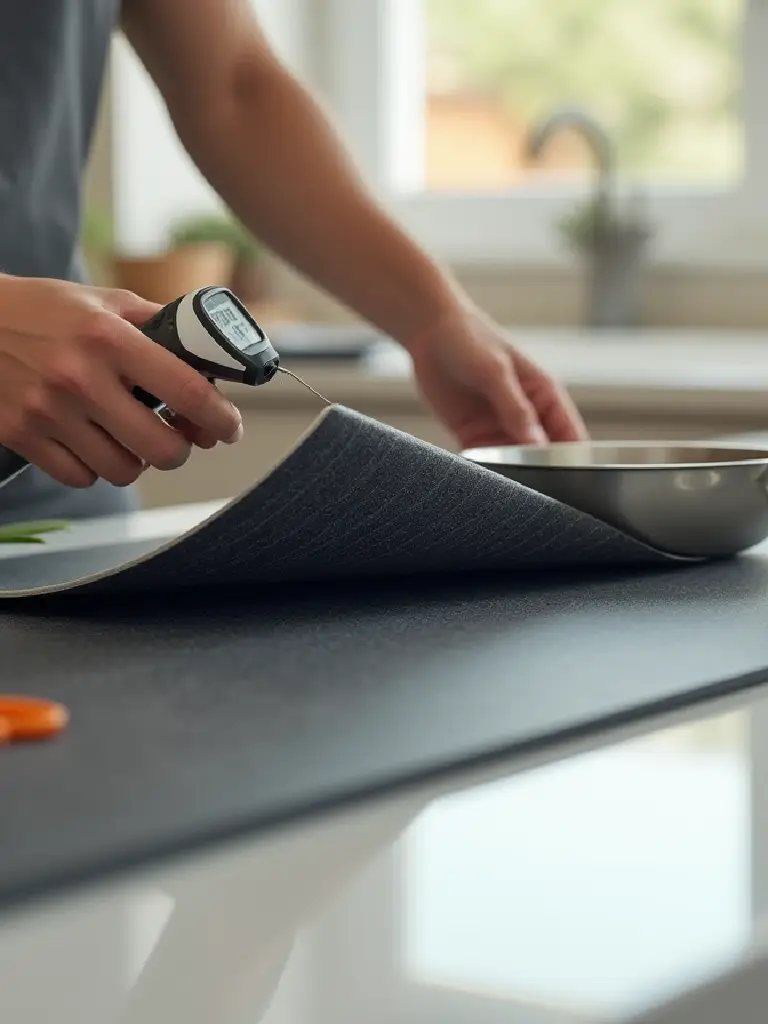
Top 3 content gaps competitors often leave out (what this article will add)
Most countertop mat reviews skip important questions:
- Eco-friendliness & disposability: Is the mat recyclable or landfill-only? Are manufacturing materials sustainably sourced?
- anti-slip design: Does the mat stick, suction, or use micro-texture to stay put even when wet or greasy? Are there consumer or lab slip tests?
- Countertop material compatibility: Does the mat fit unusual edges, resolve gas-stove gaps, or match seams and backsplashes? What countertop types are non-reactive with it?
No competitor data addresses these subtopics as of 2024. For more surface protection solutions, see our in-depth review of drain mats or explore kitchen organization best practices on our site.
Buyer’s checklist & quick FAQ (actionable takeaway for transactional readers)
- Measure carefully: Check countertop and appliance gaps; verify actual mat dimensions before ordering.
- Material & temp rating: Seek food-grade silicone or certified heat-resistant polymers with tested max temp (aim for 400°F+ for stove use).
- Waterproof & cleanability: Confirm “sealed” or “non-porous”—look for “dishwasher safe” or at least wipeable designs.
- Slip resistance: Find anti-slip claims or user video tests—especially for marble/granite, which can be slick.
- Warranty/returns: Buy from a seller who clearly posts return policy and warranty coverage.
- Price band: Compare price per sq. ft. and included extras (like cut-to-fit templates or multiple mats in a pack).
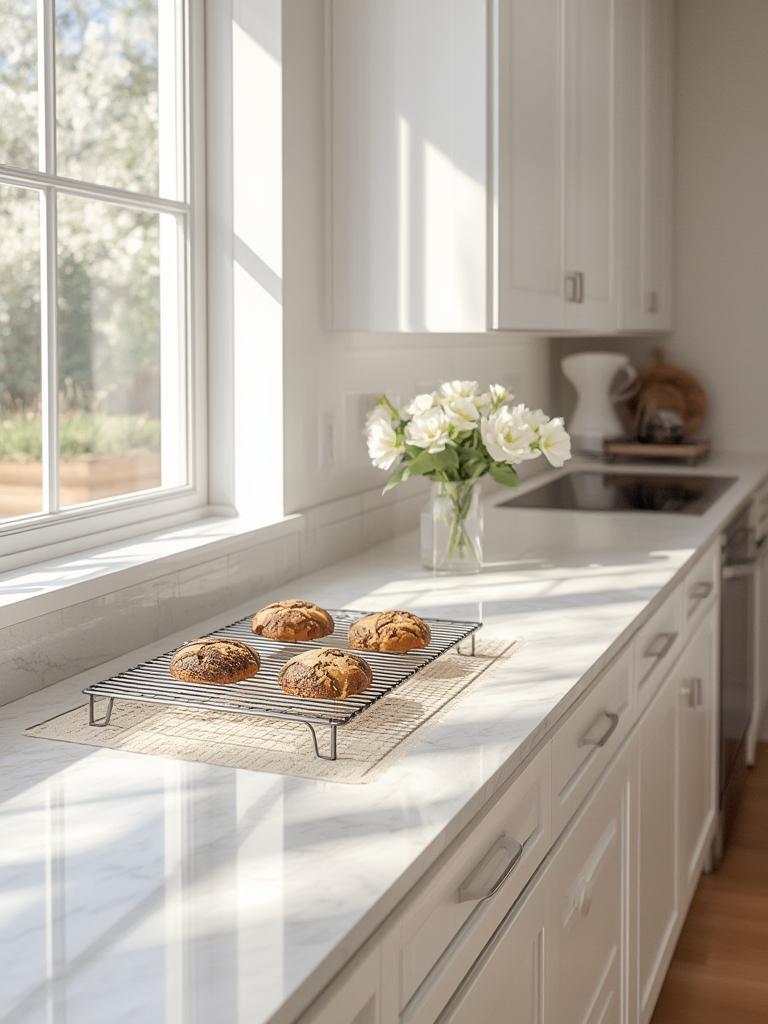
Research gaps & next steps for editorial follow-up (for sources and testing)
Multiple research queries returned “No data available” across market size, user reviews, material specs, pricing, brand comparisons and effectiveness studies for any type of countertop mat—including heat resistant countertop mat. The most actionable next steps for kitchen owners and editors:
- Collect real 2024 price data from Amazon, Walmart, specialty kitchen retailers, and leading brands
- Request third-party lab reports for temperature and waterproof testing from sellers or brands
- Gather new, independent user reviews (ideally with photos/video) and test at-home with heat/spill/slip tests
- Commission simple in-house comparisons: test hot pan exposure, measure slip resistance, and document real cleaning difficulty
Document the findings and update your buying guidance as new results become available. For related kitchen protection advice, read our proven drain mat guide.
Conclusion
Choosing an effective, heat resistant countertop mat in 2024 means you have to ask hard questions and verify every claim—since public research, side-by-side tests, and review data simply don’t exist. Use the buying checklist above. Demand certifications, exact fit, and real maintenance answers before purchasing. Real kitchen protection is worth the effort. For extra confidence, revisit our in-depth drain mat guide—and take charge of your kitchen surfaces today.
Frequently Asked Questions
What is the best material for a countertop mat?
Food-grade silicone is typically best for heat resistance, waterproofing, and easy cleaning. Always verify the material’s test certifications.
How do I know if a countertop mat is truly heat resistant?
Look for clear temperature ratings (400°F or higher) and certifications, not just marketing claims. If in doubt, ask the seller for test documentation.
Are silicone counter covers safe to use next to gas burners?
Most are only rated heat resistant, not flameproof. Keep direct exposure to open flames or high broiler heat to a minimum, and stick to certified models only.
How do I clean a waterproof kitchen counter mat?
Wipe with mild soap and water for daily use. Check if the mat is dishwasher safe for deeper cleaning. Avoid harsh scouring pads unless listed as scratch resistant.
What size countertop mat do I need?
Measure the target area carefully and consider edge overhangs, appliance placement, and stove/sink gaps. Some mats are cut-to-fit, allowing better customization.
—